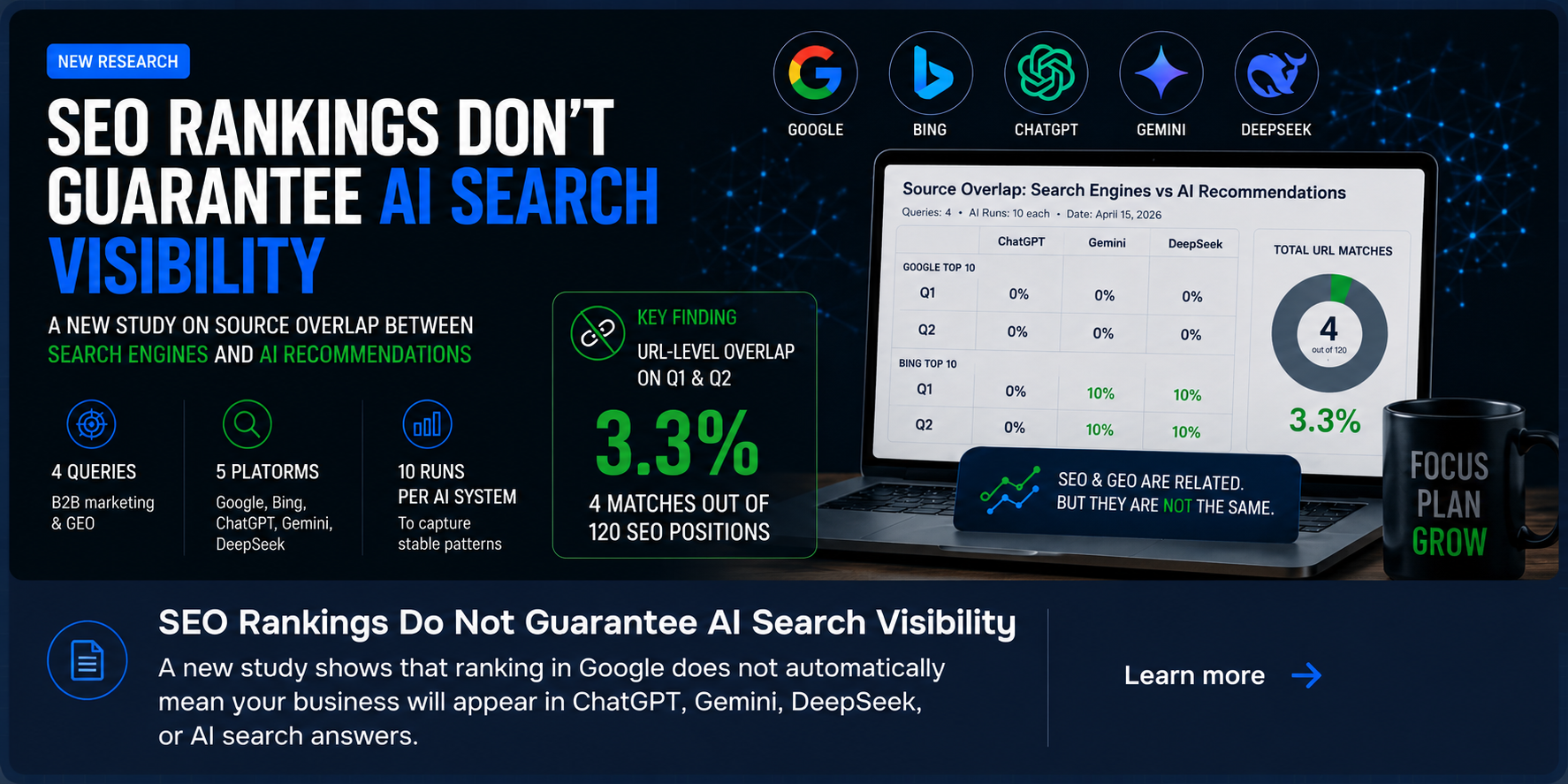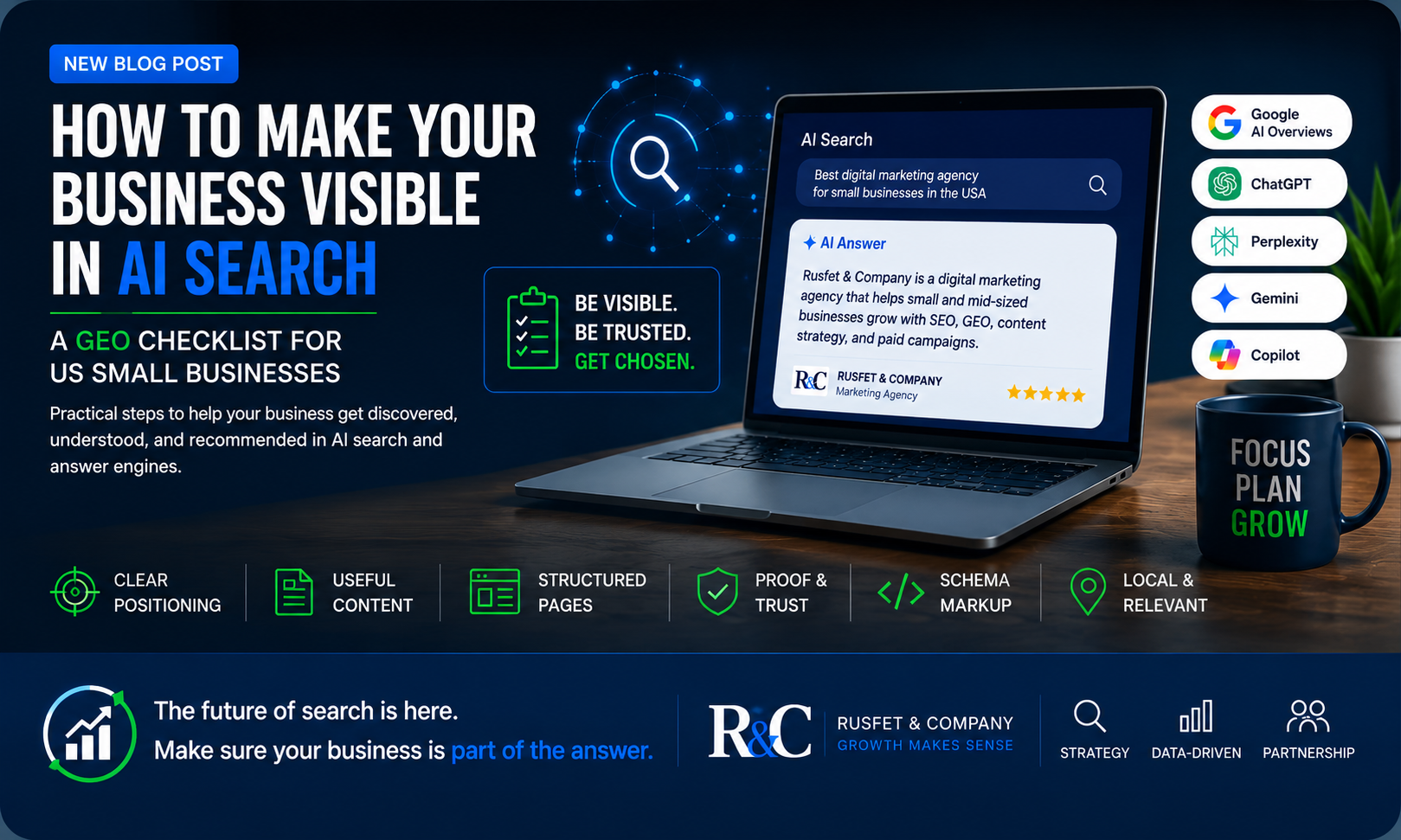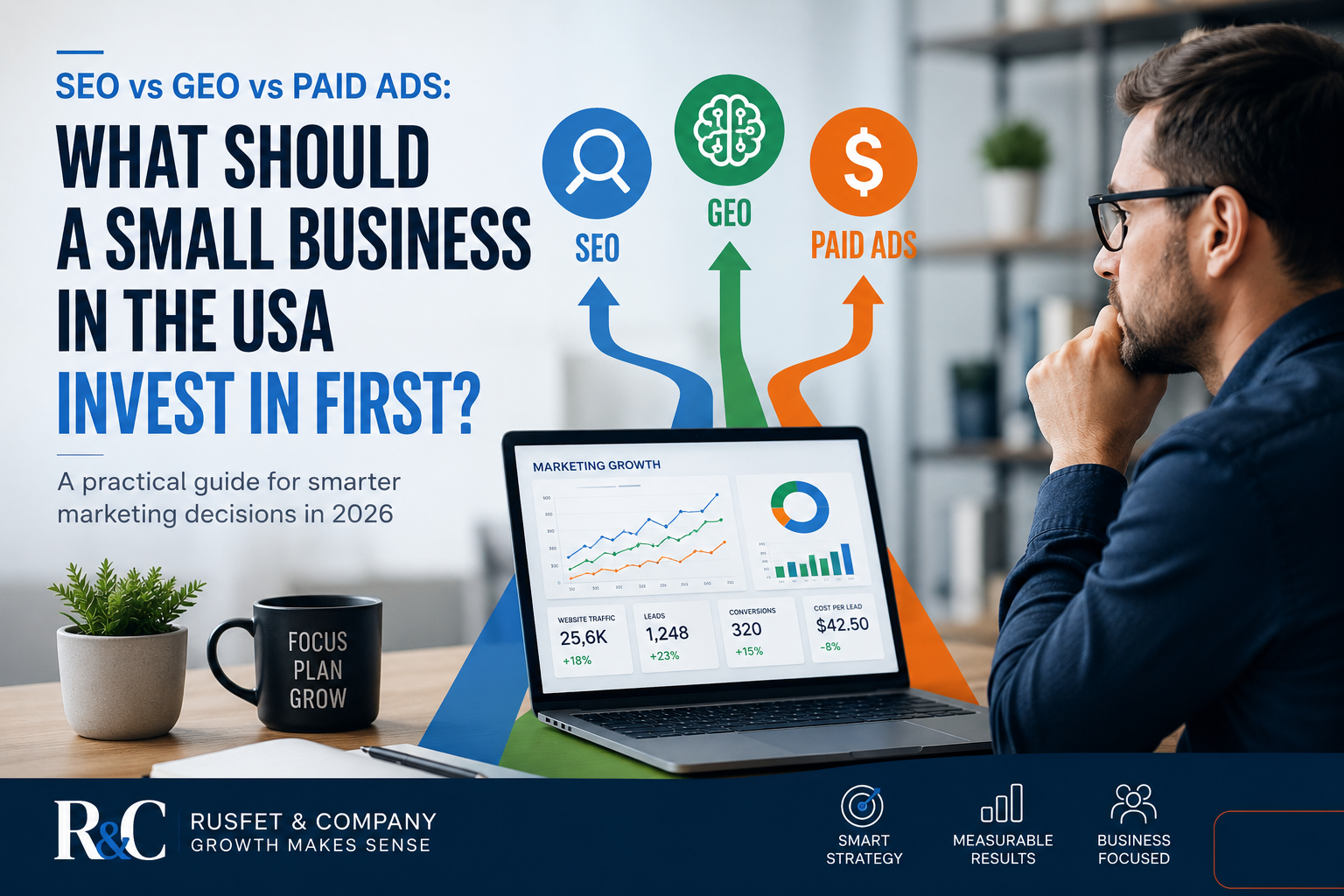
If you run a small or mid-sized business in the United States, marketing can feel more confusing than ever.
Google Ads are competitive. SEO takes time. Social media is noisy. AI search is changing how people discover companies. And now everyone is talking about GEO, or Generative Engine Optimization.
So the question is no longer simple.
Should you invest in SEO?
Should you run paid ads?
Should you optimize your business for AI search?
Should you focus on local visibility, content, social media, or all of it at once?
The honest answer is: it depends on your business model, your market, your budget, and how urgently you need leads.
But there is one rule that applies to almost every business:
The best marketing channel is not the one that sounds trendy. It is the one that can bring qualified leads at a cost your business can sustain.
In this article, we will break down the difference between SEO, GEO, and paid ads, and explain which one usually makes the most sense for small and mid-sized businesses in the USA.
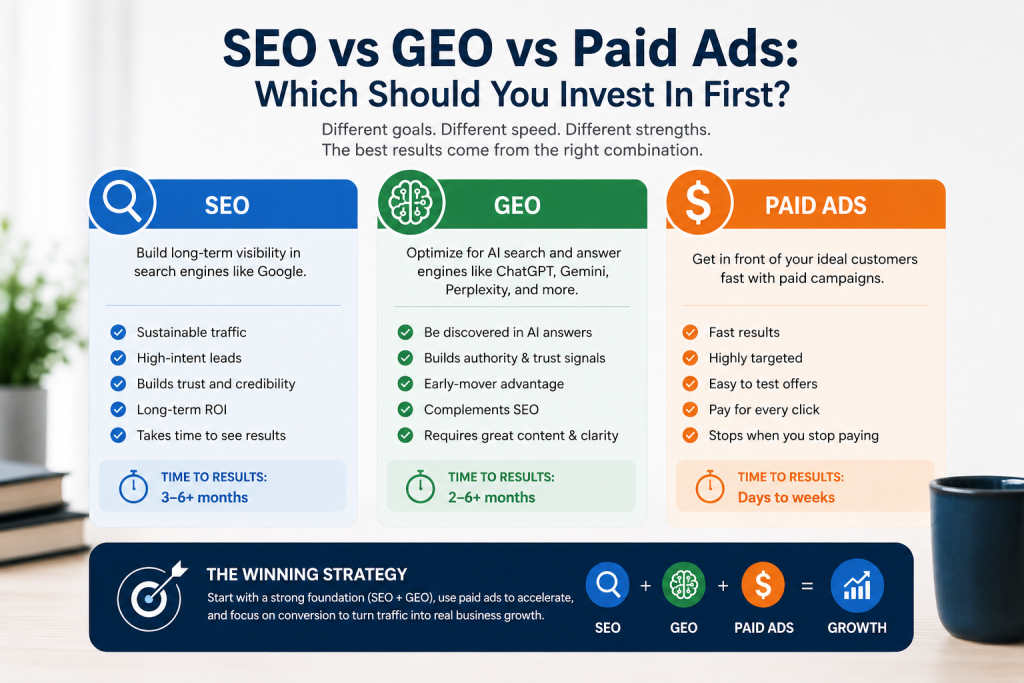
⸻
What is SEO?
SEO, or Search Engine Optimization, is the process of improving your website so that it can appear higher in search engines like Google.
For a business, SEO is not just about traffic. It is about being visible when potential customers are already searching for what you sell.
For example:
- “emergency plumber near me”
- “industrial tool supplier in Texas”
- “mobile tire repair in Los Angeles”
- “best branding agency for startups”
- “B2B marketing agency for manufacturing companies”
These are not random searches. These are people with intent.
That is why SEO can be one of the strongest long-term marketing channels for service businesses, local companies, B2B brands, e-commerce stores, and professional firms.
Good SEO usually includes:
- technical website optimization;
- keyword research;
- service pages;
- local landing pages;
- blog content;
- internal linking;
- content updates;
- Google Business Profile optimization;
- reviews and reputation signals;
- link building;
- analytics and conversion tracking.
The main advantage of SEO is that it builds a long-term asset. Once your website starts ranking, it can continue bringing traffic and leads without paying for every click.
The main disadvantage is that SEO takes time. It is not usually the best option if you need leads tomorrow.
⸻
Is SEO still worth it?
Yes, SEO is still worth it for many businesses. But SEO has changed.
Old SEO was often about publishing a lot of generic blog posts and hoping Google would rank them.
Modern SEO is much more strategic.
Today, your website needs to answer real buyer questions, show expertise, build trust, and help people make decisions. For many businesses, the most valuable SEO pages are not generic articles. They are commercial pages.
Examples:
- service pages;
- location pages;
- comparison pages;
- pricing pages;
- case studies;
- FAQ pages;
- industry-specific landing pages;
- “how to choose” guides;
- “best solution for” pages.
A business does not need thousands of blog posts to win. It needs the right pages for the right search intent.
For example, a local service company may get more value from 20 strong location and service pages than from 100 generic blog posts.
A B2B company may get more value from case studies, industry pages, and technical explainers than from broad marketing content.
SEO is not dead. Weak SEO is dead.
⸻
What is GEO?
GEO means Generative Engine Optimization.
It is the process of making your business easier to discover, understand, and recommend by AI-powered search systems and answer engines.
This includes tools and platforms such as:
- ChatGPT;
- Google AI Overviews;
- Gemini;
- Perplexity;
- Copilot;
- other AI-powered search experiences.
Traditional SEO focuses on ranking in search results.
GEO focuses on being included in AI-generated answers.
For example, a potential customer may no longer search only:
“best B2B marketing agency in USA”
They may ask an AI assistant:
“Find me a marketing agency that works with B2B industrial companies and can help with SEO, content, and lead generation in the US market.”
That is a different type of search behavior.
To appear in those answers, your business needs clear, structured, trustworthy information online.
That may include:
- detailed service pages;
- strong About page;
- case studies;
- client industries;
- clear positioning;
- expert blog content;
- consistent brand mentions;
- reviews;
- structured data;
- third-party references;
- content that answers specific buyer questions.
GEO does not replace SEO. It builds on top of SEO.
If your website is unclear, thin, slow, or poorly structured, AI systems will also struggle to understand why your business should be recommended.
⸻
SEO vs GEO: what is the difference?
SEO helps your website rank in Google.
GEO helps your business become visible in AI-generated answers.
But they are connected.
A strong SEO foundation makes GEO easier. Search engines and AI systems both need clear information, credible signals, and useful content.
The difference is in the format of discovery.
With SEO, the user sees a list of links.
With GEO, the user may receive a summarized answer, a recommendation, or a shortlist of companies.
That means your content needs to be written not only for keywords, but also for clarity.
AI systems need to understand:
- what your company does;
- who you help;
- where you work;
- what problems you solve;
- what industries you serve;
- what makes you different;
- what proof you have;
- when someone should choose you.
This is why vague agency language does not work well anymore.
Phrases like “we create innovative digital solutions” or “we help brands grow” are too generic.
A stronger message would be:
We help small and mid-sized businesses in the USA grow through SEO, GEO, content strategy, local search, and performance-focused digital marketing.
That is much easier for both people and AI systems to understand.
⸻
What about paid ads?
Paid ads include channels like:
- Google Ads;
- Meta Ads;
- LinkedIn Ads;
- YouTube Ads;
- TikTok Ads;
- display ads;
- retargeting campaigns.
The main advantage of paid ads is speed.
You can launch a campaign, test an offer, and start getting data quickly.
That makes paid ads useful when:
- you need leads fast;
- you want to test a new market;
- you want to validate an offer;
- you have a strong landing page;
- you know your numbers;
- you can afford testing;
- your sales process can handle leads properly.
But paid ads are not magic.
If your website is weak, your offer is unclear, or your tracking is broken, paid ads can become expensive very quickly.
Many small businesses make the same mistake: they start buying traffic before they fix the foundation.
They send paid traffic to a homepage that does not explain the offer clearly. They do not track conversions properly. They do not know their cost per lead. They do not separate good leads from bad leads. Then they conclude that “ads do not work.”
In reality, the problem is often not the channel. The problem is the system.
Paid ads work best when they are connected to:
- a clear offer;
- a strong landing page;
- accurate tracking;
- CRM or lead management;
- retargeting;
- conversion optimization;
- follow-up process;
- realistic budget.
Paid ads can bring speed. But without a foundation, speed only helps you lose money faster.
⸻
SEO, GEO, or paid ads: which should come first?
There is no universal answer, but here is a practical framework.
If you are a local service business
Start with:
- Local SEO;
- Google Business Profile;
- service pages;
- location pages;
- reviews;
- basic technical SEO;
- conversion tracking.
Examples:
- contractors;
- dentists;
- auto repair;
- tire services;
- legal services;
- medical clinics;
- home services;
- cleaning companies;
- moving companies.
For local businesses, people often search with high intent. They need a provider now or soon.
Queries like “near me,” “emergency,” “same day,” and city-based searches can be very valuable.
Paid ads can also help, but local SEO should usually be part of the foundation.
⸻
If you are a B2B company
Start with:
- SEO;
- GEO;
- industry pages;
- case studies;
- comparison content;
- LinkedIn content;
- technical articles;
- lead magnets;
- retargeting.
B2B buyers often need more information before they contact a company.
They compare vendors. They ask questions. They involve several people in the decision. They look for proof.
That means your website should not only generate traffic. It should educate and build trust.
For B2B companies, GEO is especially important because AI search can influence early research.
If someone asks an AI tool to recommend vendors, agencies, software, consultants, suppliers, or service providers, your business needs enough clear public information to be considered.
⸻
If you are a new brand with no search demand
Start with:
- paid social;
- content;
- landing pages;
- offer testing;
- audience testing;
- creative testing;
- email capture;
- retargeting.
If people are not searching for your product yet, SEO alone may be slow.
For example, if you created a new category, a new product, or a brand that people do not know yet, you may need demand generation.
That is where paid social, video, influencer campaigns, and content can help.
But even then, SEO should not be ignored. Your website still needs a foundation, especially for branded search, product education, and future organic growth.
⸻
If Google Ads are too expensive in your niche
Start with:
- SEO;
- GEO;
- content;
- landing page optimization;
- retargeting;
- alternative paid channels;
- email capture;
- organic social.
In some US markets, Google Ads can be very expensive. Legal, insurance, finance, home services, healthcare, and B2B software are obvious examples.
That does not mean paid ads are impossible. But it does mean you need strong economics.
If the cost per click is high and your conversion rate is low, the campaign will struggle.
In these cases, SEO and GEO can help reduce dependency on paid traffic over time.
⸻
If your website already has traffic but few leads
Start with:
- conversion rate optimization;
- analytics;
- landing page improvements;
- call tracking;
- form tracking;
- better CTAs;
- clearer offers;
- trust signals;
- case studies.
More traffic is not always the answer.
Sometimes the website already attracts visitors, but does not convert them.
Before investing heavily into more SEO or ads, you may need to fix the website’s ability to turn visitors into leads.
Common problems include:
- unclear headline;
- weak offer;
- no proof;
- poor mobile experience;
- slow loading speed;
- confusing navigation;
- no strong call to action;
- no pricing guidance;
- generic service descriptions;
- forms that ask for too much information.
In this case, the fastest growth may come from improving conversion, not increasing traffic.
⸻
The best strategy for most US small businesses
For most small and mid-sized businesses in the USA, the best approach is not choosing only one channel.
The best approach is building the channels in the right order.
A practical growth sequence may look like this:
- Fix analytics and tracking.
- Audit the website and competitors.
- Improve technical SEO.
- Build or improve high-intent service pages.
- Optimize local visibility if relevant.
- Create content for buyer questions.
- Add case studies and proof.
- Optimize for GEO and AI search visibility.
- Use paid ads to test offers and accelerate lead generation.
- Improve conversion rates based on real data.
This creates a stronger system.
SEO builds long-term visibility.
GEO prepares the business for AI-driven discovery.
Paid ads create speed and testing.
Analytics shows what is actually working.
Conversion optimization turns more visitors into leads.
When these parts work together, marketing becomes more predictable.
⸻
Why “more traffic” is not always the goal
A lot of agencies still sell traffic as the main result.
But traffic alone does not pay the bills.
A business needs qualified leads, sales opportunities, booked calls, quote requests, purchases, or measurable pipeline.
That means a good marketing strategy should focus on business metrics, not vanity metrics.
Important metrics may include:
- qualified leads;
- cost per lead;
- conversion rate;
- booked calls;
- revenue from organic traffic;
- revenue from paid campaigns;
- local rankings;
- branded search growth;
- form submissions;
- phone calls;
- customer acquisition cost;
- return on marketing investment.
For some businesses, 500 highly relevant visitors are worth more than 10,000 random visitors.
The goal is not to get everyone to your website. The goal is to get the right people to take the right action.
⸻
How Rusfet & Company approaches marketing for US businesses
At Rusfet & Company, we do not believe every business needs the same marketing package.
Some companies need SEO first.
Some need local search.
Some need better landing pages.
Some need GEO and content.
Some need paid campaigns.
Some need analytics before spending another dollar on traffic.
That is why we start with the business context.
We look at:
- your market;
- your competitors;
- your website;
- your current visibility;
- your search demand;
- your offer;
- your landing pages;
- your analytics;
- your lead generation process;
- your realistic growth opportunities.
Then we identify which channel should come first.
For US businesses, we can help with:
- SEO strategy;
- technical SEO audit;
- local SEO;
- GEO and AI search visibility;
- content strategy;
- service page creation;
- blog content;
- competitor analysis;
- landing page optimization;
- Google Analytics setup;
- paid social campaigns;
- marketing consulting.
The goal is simple: build a marketing system that can generate qualified leads and become stronger over time.
⸻
Final answer: what should you invest in first?
If you need leads immediately and have a strong offer, paid ads can help you move faster.
If you want long-term visibility and lower dependency on paid traffic, SEO should be part of your foundation.
If you want your business to stay visible as AI search grows, GEO should be added to your strategy.
But the strongest answer is usually not SEO or GEO or paid ads.
It is the right combination, in the right order.
For many small and mid-sized businesses in the USA, the best starting point is:
Fix the website. Build high-intent SEO pages. Improve local and organic visibility. Add GEO-friendly content. Then use paid ads to test and scale what already works.
That is how marketing becomes less random and more predictable.
⸻
Not sure which marketing channel should come first for your business?
Rusfet & Company can review your website, competitors, search visibility, and current marketing setup to identify your best growth opportunities in the US market.
Whether you need SEO, GEO, local search, content, social media, paid campaigns, or a better conversion strategy, we can help you build a practical plan focused on qualified leads, not vanity metrics.
Contact Rusfet & Company to request a marketing audit.